

BA (Hons) History of Art and Museum Studies
- Entry year:
- 2026/27
- Start date:
- September
- Study mode:
- Full-time
- Course duration:
- 3 years
- Campus:
- Mount Pleasant
- UCAS Code:
- VP31
Why study this course with LJMU?
- 100% of students surveyed on this course said teaching staff were good at explaining things, made the subject engaging and found the course intellectually stimulating (National Student Survey 2025)
- Excellent overall student satisfaction rates in consecutive National Student Surveys
- Follow our course activities on Instagram and Facebook
- Option to specialise and tailor your assessments according to your career plans or personal interests in Art History
- No exams - all assessments by coursework
- You can get involved with the Schools own internationally-important gallery, the Exhibition Research Lab
- Taught in the John Lennon Art and Design Building so you can mix and work with artists across a range of disciplines
About your course
Informed by internationally important research, the BA (Hons) History of Art and Museum Studies programme is taught in our award-winning John Lennon Art and Design Building and offers exciting international internship opportunities.
You will also find that you have the opportunity to examine particular art works and artists of your own choice in detail. In fact you can even design your own course. For example, if contemporary art is your passion, you can choose it as your research topic for almost all assessments, whereas if you plan to work as a Museum Curator, you can be assessed on your museum placements.
We have contacts with many local art galleries and museums, but our collaboration with Tate Liverpool is particularly beneficial, as you will spend time there getting to know its collections as well as the curators who can tell you what it's really like to work in the sector. There are more museums and galleries in Liverpool than in any city other than London - so it is an excellent city in which to study History of Art and Museum Studies.
However, our contacts aren't only based in and around Merseyside. Our internships in Venice and New York offer unique opportunities to really immerse yourself in the art world and experience living abroad for a few months. We also typically organise field visits to the art capitals of London, Amsterdam, Florence, Barcelona and Paris.
To find out more, visit the History of Art and Museum Studies Facebook page.
Study History of Art and Museum Studies at LJMU

Hear from some final year students talk about their experience as they prepare for their final year degree show exhibition.
History of Art and Museum Studies

Hear from some of our students as they tour the Lady Lever Art Gallery
Course modules
What you will study on this degree
Further guidance on modules
Modules are designated core or optional in accordance with professional body requirements, as applicable, and LJMU’s Academic Framework Regulations. Whilst you are required to study core modules, optional modules provide you with an element of choice. Their availability may vary and will be subject to meeting minimum student numbers.
Where changes to modules are necessary these will be communicated as appropriate.
Core modules
Artists and Practices
20 credits
20 credits
This module will outline key developments in the history of the artist. Students will examine them in the context of films, monographs and autobiography to introduce basic materials and techniques used by artists and develop an understanding of these.
Frameworks in Art History
20 credits
20 credits
This module will introduce students to the range and diversity of areas of the discipline of art history and to some of the themes of universal concern to artists from all eras.
Introduction to Art History
20 credits
20 credits
Within this module students will explore art and design works and themes in a chronological context. Simultaneously students will examine the social contexts for art and design.
An Introduction to Museums and Galleries
20 credits
20 credits
This module will introduce the key organisational structures of museums on Merseyside to examine the changing role of museums and art galleries and explore the history and circumstances of collecting and collections.
Collaboration with Contemporary Art
20 credits
20 credits
Within this module, students will encounter contemporary art and artists in the north-west region, to develop an understanding and knowledge of the various organizations and roles within the industry.
Global Art
20 credits
20 credits
This module will expose students to a range of art made by Global artists in order to broaden knowledge and introduce students to the diversity of practices and techniques employed outside of Europe and the USA.
Core modules
Curating: Histories and Practices 1
20 credits
20 credits
This module will outline key museological concepts and issues to identify and explore broad critical debates relating to contemporary practices of display.
Art and Representation
20 credits
20 credits
This module will outline key debates concerning the theories of representation to examine key images in their socio-political context and evaluate research materials.
Methods in Art History
20 credits
20 credits
This module will enable students to develop a knowledge and understanding of their own methodological position to explore art works from all periods of Art and Design History.
Curating: Histories and Practices 2
20 credits
20 credits
This module provides students with practical experience of curating and with contact with curatorial specialists from within the industry. Students will also learn about the history of museums, galleries and collecting processes.
Design Histories
20 credits
20 credits
This module enables students to explore design history and applied arts. Students will be informed about arts and crafts such as ceramics, furniture, jewellery and silver and will develop the facilities to analyse these subject areas critically with an understanding of the theoretical underpinnings and social environments surrounding the disciplines.
Internship and Professional Development
20 credits
20 credits
This module will give students the knowledge needed to identify, develop and secure employment opportunities. Interview skills and presentation skills will be developed within the context of the cultural industries on Merseyside. Students will be introduced to work-based and work-related learning in an appropriate environment.
Optional modules
Study Semester Abroad - History of Art
60 credits
60 credits
The aim is to provide students with a semester of study at an approved overseas partner that will replace one semester of their LJMU programme at level 5. This is a semester of full-time study at an approved higher education institution which will replace one semester of level 5 study at LJMU. The modules to be studied must be agreed in advance, and must be an appropriate substitute for the modules being replaced. Assuming successful completion of this semester, mark-bearing credit will be awarded by the University Recognition Group. The grade conversion scale to be used will be made available in advance of the semester abroad.
Study Year Abroad - History of Art and Museum Studies
120 credits
120 credits
Core modules
Research Project (Dissertation)
40 credits
40 credits
The Research Project is to collect, evaluate and process information within the context of specified research objectives. Students will formulate and present arguments with clarity, fluency and coherence according to the tenets of the discipline.
Research Paper and Symposium Presentation
40 credits
40 credits
This module will identify and explore an agreed thematic topic relating to art history and museology to co-ordinate research in the context of the aims and objectives.
Major Project Practice
20 credits
20 credits
This module allows students to follow and develop their own personal areas of interest identified to develop the ability to plan, implement and complete a sustained piece of practical or applied research.
Major Project Development (with the Museums Association)
20 credits
20 credits
This module allows students to follow and develop their own personal areas of interest identified to develop the ability to plan, implement and complete a sustained piece of practical or applied research.
Your Learning Experience
Excellent facilities and learning resources
We adopt an active blended learning approach, meaning you will experience a combination of face-to-face and online learning during your time at LJMU. This enables you to experience a rich and diverse learning experience and engage fully with your studies. Our approach ensures that you can easily access support from your personal tutor, either by meeting them on-campus or via a video call to suit your needs.
You will be taught by friendly lecturers in small-group tutorials and workshops, which give you the chance to discuss course material more informally. There will also be study visits and workshops at local museums, galleries and art institutions. A lot of your time will be devoted to personal study including library and online research and, as the course progresses, this will increase as you work on your research-based project, which may be offsite - for example if you choose to curate an exhibition in an art gallery.
Work-related Learning
The History of Art and Museum Studies department is fortunate to have many influential connections, both in Liverpool and internationally. Our links with other local high-profile organisations such as the Bluecoat Arts Centre, Open Eye Gallery, National Museums Liverpool, FACT, Liverpool Biennial, Static Gallery and Tate Liverpool have resulted in successful projects as well as employment for students.
Thanks to our strong links with a number of art institutions, this course offers many opportunities including our Peggy Guggenheim Internship Programme in Venice - each offers unique and varied opportunities to experience the art world as well as adding real value to your CV. As part of our Internship module you will have opportunities to gain work experience in a wide variety of art-related institutions, including museums and galleries, auction houses, sites of cultural heritage, archives and artists' studios. We also offer unique opportunities to experience the art world through exchange placements at universities across Europe and in the USA.
We offer opportunities to arrange mock interviews with art professionals and to develop your teamwork skills by organising a public symposium at a museum or art gallery. In your final year, you will have the opportunity to take on a major project, which could involve running art activities in schools, curating an exhibition, conserving art works or writing for a newspaper. All of these experiences will help you to develop the key transferable skills that employers look for.
Dedicated personal tutor, plus study skills support
From the moment you begin your studies at LJMU, you will be allocated a personal tutor who will be available to meet you one-to-one to give feedback or support on work or projects and help you plan your future career.
Assessment varies depending on the modules you choose, but will usually include a combination of exams and coursework.
We acknowledge that all students perform differently depending on the way they are assessed, which is why we use a combination of assessment methods. However, there are no exams on this course; all assessment is through coursework. This may include:
- essays
- a dissertation
- literature reviews
- reflective portfolios
- individual and group presentations
- live projects (e.g. curating an exhibition, teaching within schools)
- reports on field studies or placements
Constructive feedback is crucial in helping you to identify your strengths and areas where you may need to put in more work. For this reason, we offer written and oral feedback immediately after each completed assignment as well as mid-way through, and at the end of, each semester. However, you will be encouraged to discuss your work informally with your tutors on an ongoing basis. As your tutors know you well you can be confident that their advice is based on deep knowledge of your work and your potential.
Where you will study
Rated a Top 10 Art School in the 2021 Guardian University League Tables.
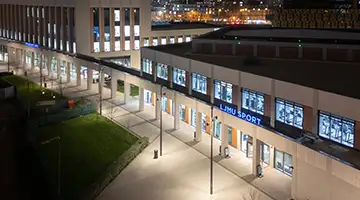
Cross-disciplinary learning in art and design subjects takes place in the John Lennon Building, part of the Liverpool School of Art and Creative Industries, located on the Mount Pleasant Campus. Here students studying a variety of disciplines, including Architecture, Art in Science, Exhibition Studies, Fashion, Fine Art, Graphic Design, History of Art and Museum Studies and Interior Architecture, will have the opportunity to develop their work in state-of-the-art workspaces and facilities within a stimulating and critically demanding environment.
Course tutors

Emma completed a Ph.D. on Barbara Hepworth in 1997 and has lectured on all aspects of History of Art and Design for twenty years. She has written three academic books - Who Do You Think You Are? The Asia Triennial Manchester, 2018 (2019), The Public Sculpture of Cheshire & Merseyside (2012) and The Liverpool Academy: A History and Index (1997) - as well as a number of journal articles and conference papers, and has also curated exhibitions. Published chapters or journal articles include: Liberating Form: Barbara Hepworth's United Nations Memorial in Sculpture (2001); Neglected Catalysts. The Function of Drawings and Paintings in Barbara Hepworth's Oeuvre in Apollo (2003); Barbara Hepworth within an International Context in Tate's Barbara Hepworth Reconsidered (2003) and Representation and Reputation: Barbara Hepworth's Relationships with her American and British Dealers (2013) in Tate Papers On-Line. Her 2010 book was nominated in April 2013 for the William M. B. Berger British Art History Prize for the best British Art History publication. Emma's research is disseminated widely outside the academic arena, including by: being interviewed for BBC Radio 4; being a regular Visiting Lecturer at London's Victoria and Albert Museum; presenting lectures to cruise ship passengers and other groups and associations due to being represented by several entertainment agencies. The focus of Emma's research lies in three areas: public sculpture; maritime history and design and utopian, New Urbanist architecture and environments.
History of Art and Museum Studies is taught in small cohorts and regularly receives 100% student satisfaction in the annual National Student Surveys.




My favourite time on the course was having the amazing opportunity to work as an intern at the Peggy Guggenheim Museum in Venice. Not only did I learn the ins and outs of working in an international art gallery but I also made some wonderful friends and had the chance to live abroad.
Career paths
Past graduates have found careers as curators, education officers, marketing or public relations officers or co-ordinators of volunteers in museums, conservation experts, teachers, auctioneers, arts administrators, art insurance brokers, local authority arts officers, archive managers, charity arts grants administrators and journalists.
The course has a strong network of supportive graduates who regularly feed back into the course by making visits and providing advice. A number go on to study postgraduate degrees.
Student Futures - Careers, Employability and Enterprise Service
A wide range of opportunities and support is available to you, within and beyond your course, to ensure our students experience a transformation in their career trajectory. Every undergraduate curriculum includes Future Focus during Level 4, an e-learning resource and workshop designed to help you to develop your talents, passion and purpose.
Every student has access to Careers Zone 24/7, LJMU's suite of online Apps, resources and jobs board via the LJMU Student Futures website.
Tuition fees and funding
- Full-time per year:
- £9,790
Fees
Tuition fees for home students beginning their studies in September 2026 will be £9,790 for the 2026/27 academic year, subject to Parliamentary approval.
In England and Wales, tuition fees for home undergraduate students are set in accordance with the Government’s regulated fee cap. The Government has confirmed that this cap will be £9,790 for 2026/27 and £10,050 for 2027/28, in both cases subject to Parliamentary approval.
The Government has also indicated that from the 2028/29 academic year onwards, the fee cap may be adjusted annually in line with inflation. As a result, tuition fees in future years may increase in line with inflation. We will provide confirmation of any changes as early as possible in advance of each academic year.
The university reserves the right to increase tuition fees in accordance with any changes to the maximum allowable fees set by the UK Parliament.
The fees quoted above cover registration, tuition, supervision, assessment and examinations as well as library membership and student IT support with access to printed, multimedia and digital resources including programme-appropriate software and on campus Wi-Fi.
Financial Support
The University offers a range of scholarships to support students through their studies. You'll find all the information you need on our specialist funding pages, including details of the Student Support Fund and other activities to support with the cost of living.
Additional Costs
In addition to fees, students should also keep in mind the cost of:
- Accommodation
- Travel costs including those for placements, visas and travel for studying abroad and field trips unless paid for by LJMU
- Stationery, IT equipment, professional body membership and graduation gown hire
- Full-time per year:
- £17,750
International Scholarships and payment plans
Liverpool John Moores University is committed to supporting international students by providing a range of scholarships and flexible payment plans to help students manage their tuition fees.
Scholarships
LJMU provides a variety of undergraduate scholarships to support international students. Scholarships are available to self-funded students who have accepted their offer and met all the conditions outlined in their offer letter. Students must also demonstrate that they can cover living costs, travel, and other expenses associated to studying at the university.
All self-funded international students are eligible for an automatic scholarship worth up to £3,000. For more details and to view our full list of scholarships, visit the international scholarship webpages.
Deposit
All students must pay a £5,000 deposit before they can receive their CAS letter.
For more information view our deposit page.
Tuition Fee Payment Plan
After paying their £5,000 deposit, students have the option to pay their fees in full or in three equal instalments minus any internal scholarships and discounts. There are two payment options available for international students. You can either pay your tuition fees in full before enrolment or opt for a payment plan. With the payment plan, you can pay your fees in three instalments after making your £5,000 deposit. The first instalment is due before enrolment.
All payments should be made through Flywire. Full details can be found in the How to Pay Guide.
Entry requirements
Please choose your qualifications below to view requirements
Grades/points required from qualifications: BBC (112)
Work out how many UCAS points your qualifications are worth by visiting the UCAS Tariff Calculator.
Qualification requirements
GCSEs and equivalents
Grade 4 or grade C or above in English Language and Mathematics/ Numeracy.
GCSE Equivalences accepted:
• Key Skills Level 2 in English/Maths
• NVQ Level 2 Functional skills in Maths and English Writing and or Reading
• Skills for Life Level 2 in Numeracy/English
• Higher Diploma in Maths/English
• Northern Ireland Essential Skills Level 2 in Communication or Application of Number
• Wales Essential Skills Level 2 in Communication or Application of Number
A levels
BTECs
Extended Diploma: DMM
Access awards
International Baccalaureate
OCR Cambridge Technical
Acceptable on its own and combined with other qualifications
Irish awards
Acceptable on its own and combined with other qualifications
T levels
Acceptable on its own and combined with other qualifications.
You need to obtain the required UCAS points.
Further information
-
Contextual Offers
At LJMU, we are dedicated to widening participation in education. We understand that academic potential isn't always accurately represented by grades alone. Therefore, we consider additional information included in your application. If you meet certain eligibility criteria, we may make an offer lower than our typical entry requirements.
International requirements
IELTS
6.0 overall with no component below 5.5, taken within two years of the course start date or equivalent English language proficiency test.
Further information
Please Note: All international qualifications are subject to a qualification equivalency check.
How to apply
Securing your place at LJMU
UCAS is the official application route for our full-time undergraduate courses. Further information on the UCAS application process can be found here https://www.ljmu.ac.uk/study/undergraduate-students/how-to-apply.
It is important that prospective students have enthusiasm for viewing art and design, for visiting museums and galleries, and for undertaking research. Students need to be enquiring and to be open to working in a self-directed manner.
Your university life
From accommodation and academic support to clubs and societies. Find out what LJMU has to offer.
Related Links






Talk to our students
Connect with a current LJMU student for advice and guidance on university life, courses and more.
See what our students are saying
At LJMU we want you to know you're making the right choice by studying with us. You can see what our students are saying about their experience with us through their reviews on the following websites:


News and views
Browse through the latest news and stories from the university

The university reserves the right to withdraw or make alterations to a course and facilities if necessary; this may be because such changes are deemed to be beneficial to students, are minor in nature and unlikely to impact negatively upon students or become necessary due to circumstances beyond the control of the university. Where this does happen, the university operates a policy of consultation, advice and support to all enrolled students affected by the proposed change to their course or module.
Further information on the terms and conditions of any offer made, our admissions policy and the complaints and appeals process.