

Cellular and Molecular Physiology of Lifelong Health (CaMP-LH) research group
The mission of the Cellular and Molecular Physiology of Lifelong Health (CaMP-LH) group is to optimise muscle health throughout the human life course.
Research conducted by the CaMP-LH group centres around three core areas of activity.


Lorem ipsum Lorem ipsum Lorem ipsum Lorem ipsum Lorem ipsum Lorem ipsum Lorem ipsum Lorem ipsum

Name
Job title
Our core areas of activity
Healthy muscle ageing
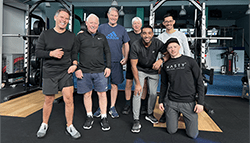 We use a new technique (Dynamic Proteome Profiling) that is unique to our group and is capable of measuring the quality of thousands of different proteins in human muscle. A loss in protein quality is a primary hallmark of ageing that has emerged from extensive experimental studies in cells and animal models.
Dynamic Proteome Profiling enables us to conduct the first studies in humans to investigate how protein quality changes as we age. This work provides the most accurate molecular readout on the fundamental processes of ageing directly in humans.
The knowledge we gain is used in subsequent studies and by other world-leading research groups to optimise exercise and other lifestyle interventions for improving lifelong health.

Omic analysis of muscle adaptation
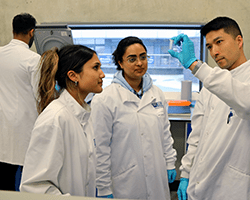 We specialise in using ‘omic techniques to discover new information about the processes that drive muscle adaptation. We were the first group to use proteomics to study human muscle responses to exercise training and we have dedicated mass spectrometry facilities for proteomic and metabolomic analyses.
We study the dynamic time-dependent processes of muscle adaptation, including changes to muscle metabolites, protein post-translational modifications, gene transcription and protein turnover. The comprehensive data collected by omic analyses enables us to discover new information about the processes that underpin muscle adaptation.
The focus of our studies spans from the most fundamental questions on the optimum number contractions required to make muscle grow through to highly applied projects that aim to prevent injury or improve recovery in athletes.
Female physiology
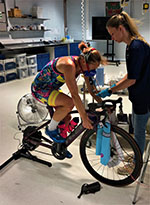 Our mission is to illuminate the unique biological processes underpinning the exceptional abilities of female athletes, and use these insights to benefit the performance and health of females across the lifespan.
Women's bodies respond differently to training and nutrition through various life stages, including menstruation, peri-menopause, and post-menopause.
Our research is dedicated to exploring the changes in the menstrual cycle throughout a woman's life. We strive to understand how hormonal fluctuations impact athletic performance, recovery, and overall well-being.
This work provides novel information to inform policy guidelines and develop robust personalised exercise and/or nutrition prescription for women of all ages.